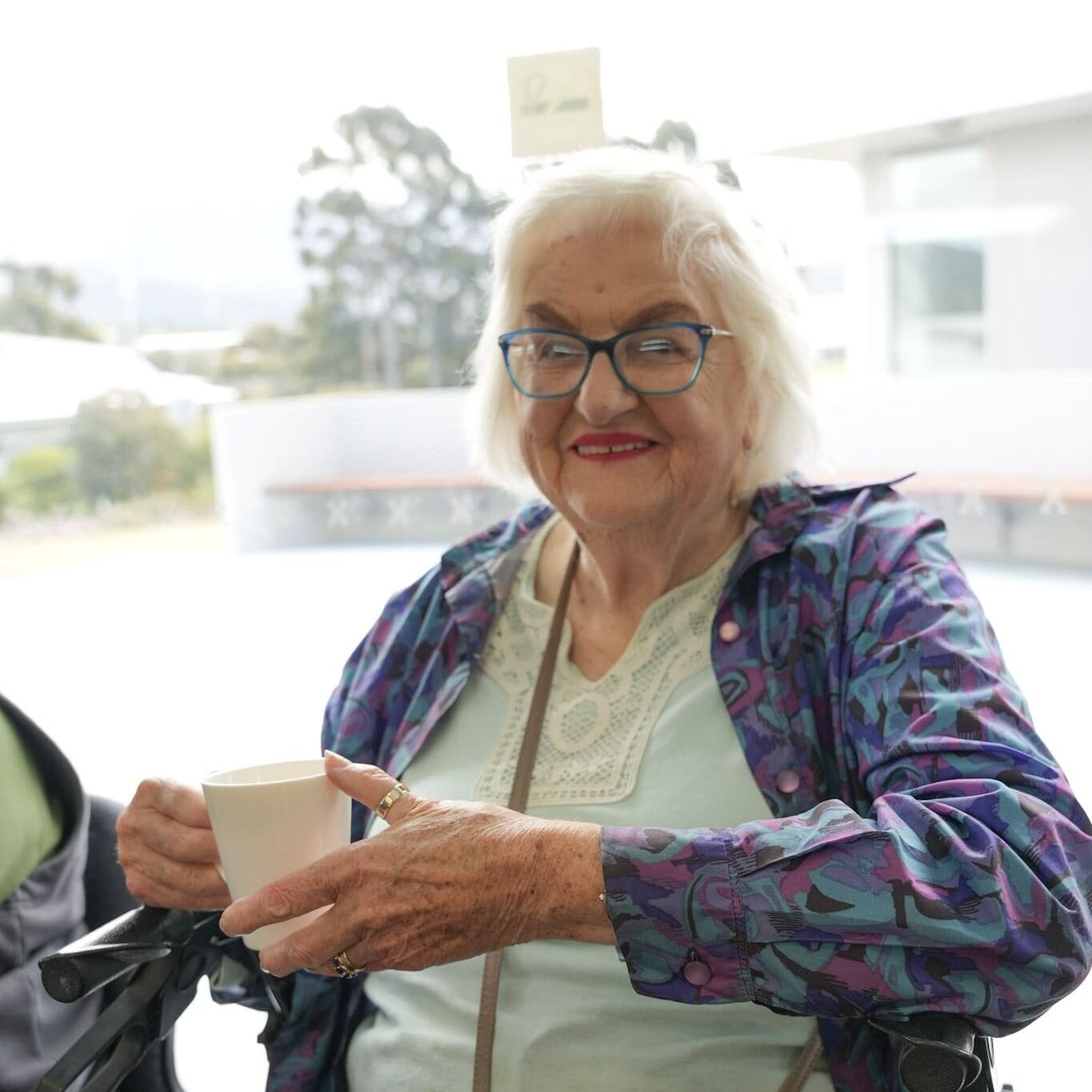
As a child, she lived in Preolenna in the Wynyard district, which was known for its “really good farming land.” Over time, the farms were sold off to the local forestry industry and transformed into pine plantations.
When she was a teenager, Merle’s family moved to Burnie where she went to Burnie High School. At 18 she began her tertiary studies, “I did my nurses training down here at the Royal [Hobart Hospital]. That was very very good; happy times. I did my midwifery training at the Queen Victoria Hospital in Victoria.”
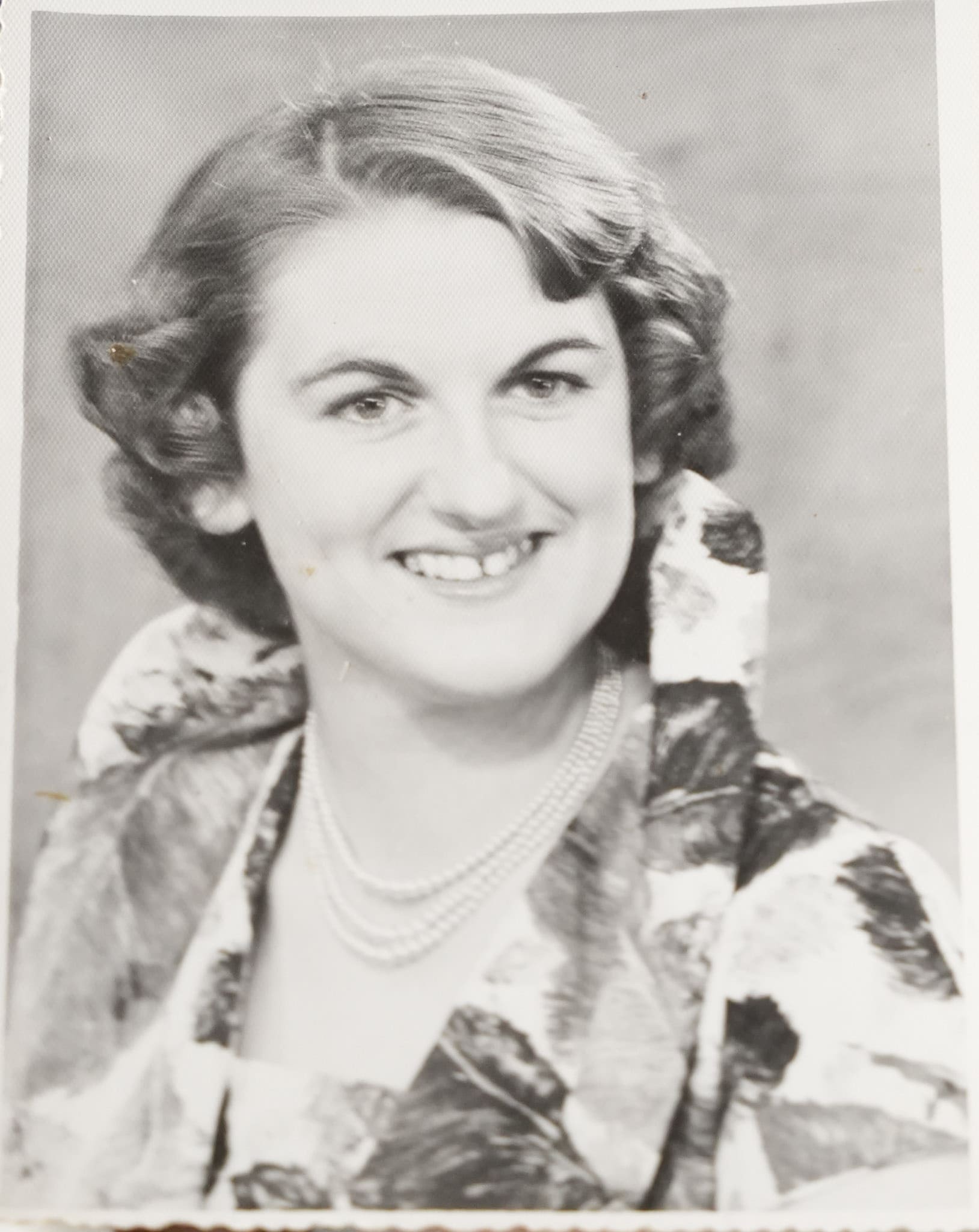
Afterwards, she went to a Bible College in Sydney, then moved to Tibooburra, a small rural town in far northwest New South Wales. There she worked on the Royal Flying Doctor’s Broken Hill network. “I thoroughly enjoyed it. That was really eye-opening... because I came from a sheltered home. It was all semi-desert, and I came from the rich fertile strip of the Northwest coast of Tasmania. It was all sheep grazing and things like that, a lot of shearing, and people used to come in with terrible injuries, often from Kangaroo shootings. I’m still in touch with some people [from Tibooburra] who still live there today and that was back in the 60s. I was there for 14 months. That was a great part of my life.”
In later years, Merle reconnected with people from Tibooburra by searching for them in a telephone directory; “I knew one surname, I called the number and it was this young fellow and he was born after I was there. He said ‘My sister Rhonda lives next door to me; she would remember you’. I called her and was having a good chat with her when the conversation started slumping, I said, ‘I have a lovely photograph of your little brother, Nonga.’ You could hear the pain in her voice and she said, ‘We haven’t got any photographs of ourselves growing up.’ I said, ‘Well, I have a picture of every kid in Tibooburra!’ I bought a gizmo from Chicken Feed and we put all of these photos on a disc and sent them up. They were delighted with them! They burnt off 20 copies and sent them all over Australia to different people because they had no idea about their childhoods.”
Merle met her first husband in Tibooburra who passed away when she was 54. She maintains a close relationship with her three stepsons, who take her to church and help with “anything I ask”.
After her time in Tibooburra, she travelled to South America and met children she sponsored. Then later in life in her 60’s she joined a missionary ship called Logos II. “They visit mostly third-world countries, but when I was on it, they were doing a stint around Europe to get volunteers. I was on it for nine months, I started off in the pantry, which was pretty solid work, and then I was Ships Nurse. We went to so many ports that they all merged into one. We got information overload because we’d do a tourist thing at each port. You couldn’t remember where you were.”
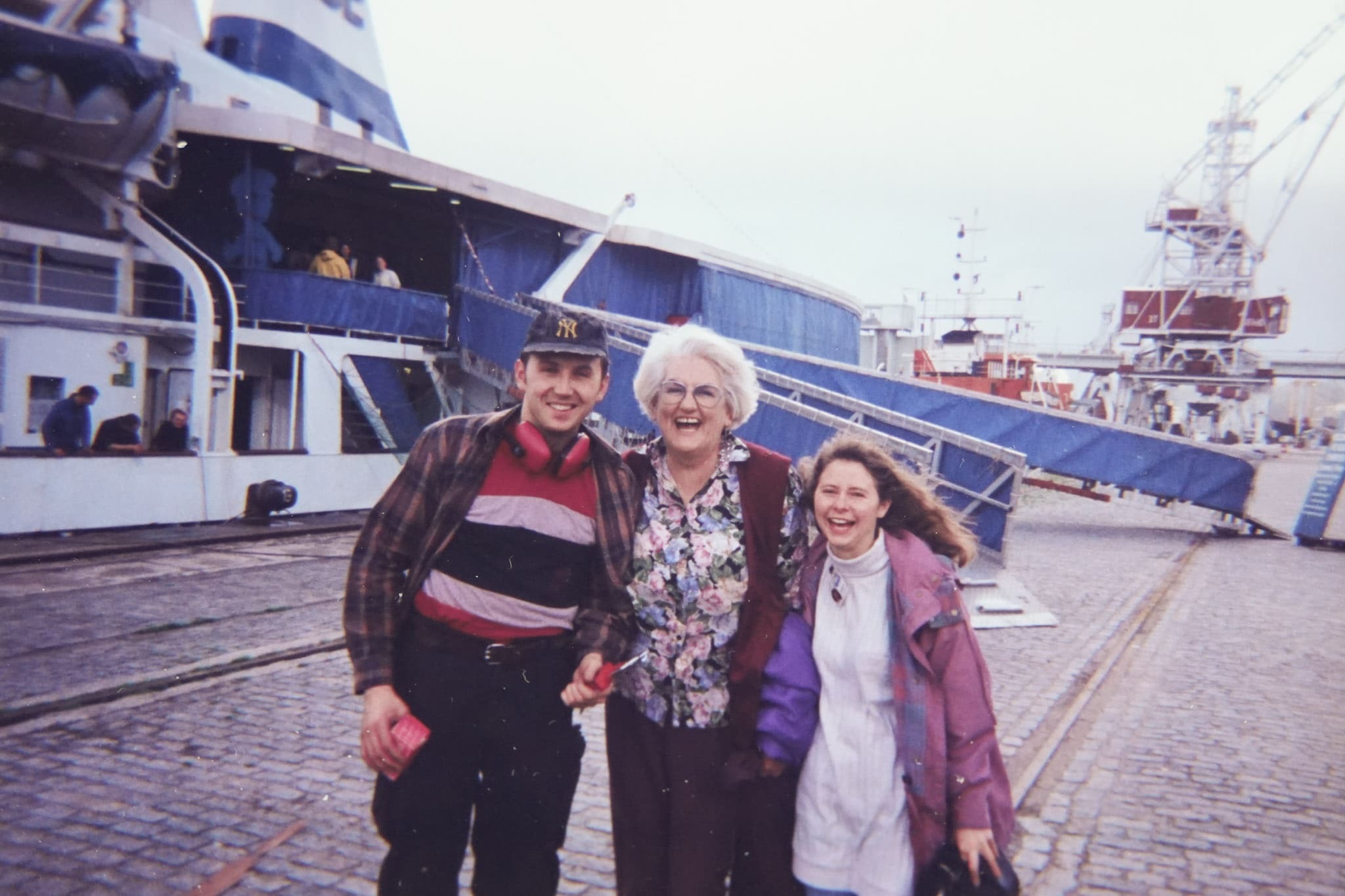
She recalls a day when a Russian fishing vessel had lost a man overboard and it was too far for their ship to go and help, “He [the captain] asked us to pray. And there were 195 of us from 36 different nationalities so we all prayed at once.” Merle never found out what happened to the man overboard but says she will meet him one day.
The day before the incident she watched a video where a man had a near-death experience after being stung by a deadly Portuguese man o’ war, “In the ambulance, he remembered the Lord’s prayer...He died and he was floating up in the corner of the room looking down and watching them work on his body...in the time he was gone there God allowed him a trip to hell. God honoured the prayer; he had the choice to go back and he said yes. Then doctors resuscitated him, and he became a pastor." In her 70s Merle was visiting her brother in Queensland and went to the local church – in a funny coincidence, the pastor was the same man she had seen in the training video years before.
Merle moved to Poatina, a small town south of Launceston, Tasmania, with a recorded population of just 96 people. She was in her 70s, and there she met her second husband, Ron.
Ron was a marathon runner and Merle walked into their 80s. She walked the Burnie Ten (10km run) twice and City2Surf (14km run) once, “I loved doing the Burnie 10 because I come from Burnie, and here I am, with my white hair out there doing it; I could hear the people in the crowd calling out my name.”
Over time Merle grew tired of living in Poatina, “Ron was a real stickler, I never thought I’d get him out of Poatina, he was just devoted. One night we went to church, and he went forward for prayer. The chap who prayed for him was Bevis’ brother [another resident at Hawthorn Village] and he said to Ron, ‘I think it’s time for you to move on from Poatina.’ When he told me this after I couldn’t believe it, I thought I was there for life. We both gave a month’s notice to all the things we were involved in. We didn’t know where we were going or what we were going to do, but we had a camper van, so it wasn’t a problem.”
While Merle and Ron were still deciding their next steps, they met a couple from Orange, New South Wales. The couple suggested that they become the caretakers at the Maranatha Campsite in Lithgow, New South Wales, “My spirit flew when she said that! Ron said as soon as she said that his spirit flew as well and he thought ‘How am I going to tell Merle?’ And when he got home, I had the Atlas open, looking to see where Lithgow was. So, we went up there and became caretakers of the campsite.”
Merle and Ron lived there for three years. During this time Ron found a lump on his neck which they would later learn was cancer. After 4 years, he passed away.
Now aged 90, Merle lives at Hawthorn Village. She has two friends in the village who she knew before she moved in, which echoes the words of her late husband that she recalls with a laugh, “Ron used to tell people that I knew half of Tasmania and was related to the other half.”